

Character consistency
How to keep an AI character consistent across three shots
Mara lifts a bottle from a counter. In the close-up, her left eyebrow slips out of sight as she turns. Watch what happens when she faces us again. The gap should reappear in her left brow. If it comes back on her right, the turn has changed her face.
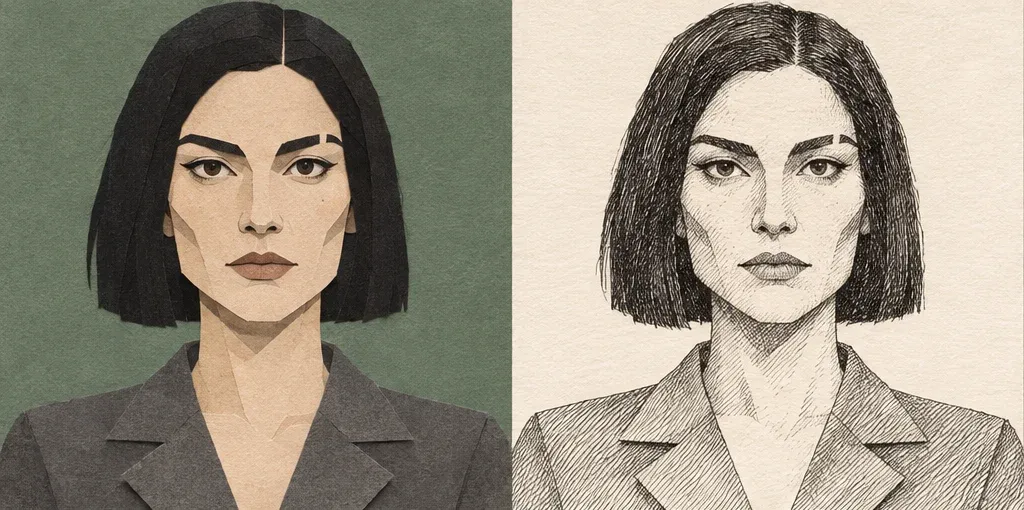
Make a reference card for Mara
Choose one front view that you have permission to use. Pick a frame where you can see the jaw, both brows and the top of the jacket. Keep the original, without a filter or a horizontal flip. Put a short note beside it. Here's one for Mara, a fictional character:
Mara · counter scene
- Face and hair
- Narrow chin. Straight black bob that ends at the jaw. A small gap in her left eyebrow (on your right in a front view).
- Wardrobe
- Gray work jacket with a low V collar. No shirt collar sticking up behind it.
- Where the bottle goes
- One amber bottle with a black cap. It starts on the counter and stays in her right hand after she picks it up.
- Free to change
- Her gaze, pose, distance from the camera and the shadows across her face.
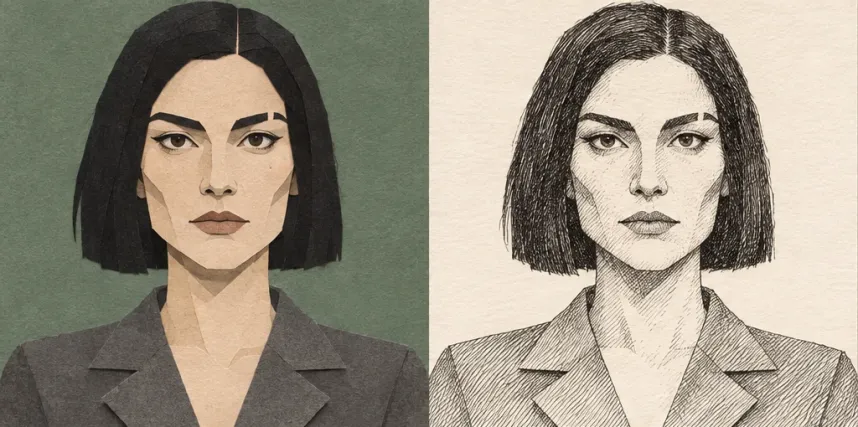
Make a separate reference for each drawing style. In a cut-paper version, cut the bob from one dark shape and leave a slit in the left brow. For an ink drawing, use a blunt line at the jaw, break the same brow stroke and shade the jacket with fine parallel lines. Either drawing should let you recognize Mara by the bob and the break in her brow. Pick one treatment for all three shots. Switching from paper to ink halfway through would make it harder to tell what the camera angle changed.
Stage the pickup before moving the camera
Lay out a front view, a close view of Mara's right cheek and a return to the front. Put each still beside the original portrait before approving it as the start of a clip. If you can't yet tell how she'll get from the counter to the last pose, use TakeWeave's storyboard guide to plan the action on either side of the cut.
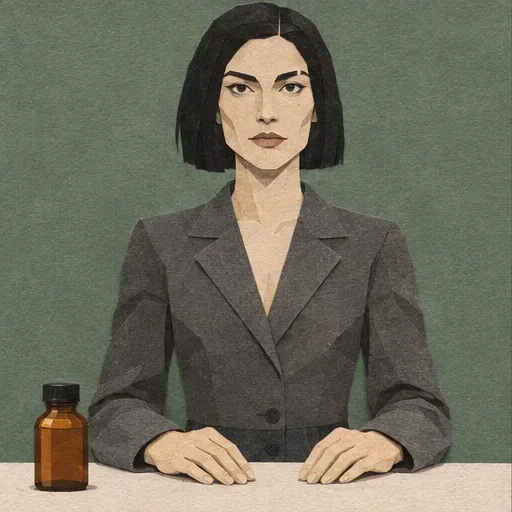
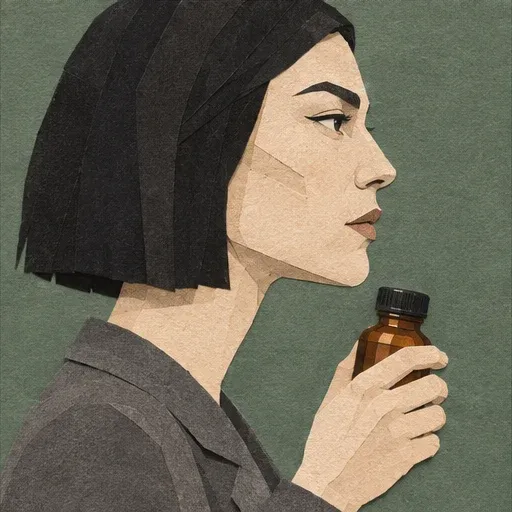
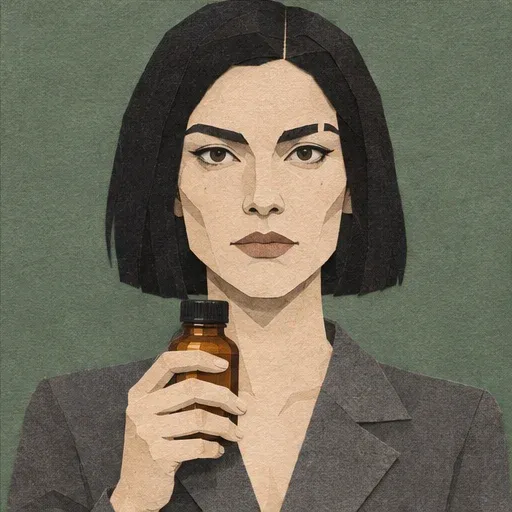
AI-generated planning illustrations in a cut-paper style. They show intended poses, not frames from a generated video.
Keep the card with each shot. Write the new instruction as an action with an endpoint. For the second shot, for example:
Close view from Mara's right. Keep the camera still. She curls her right hand around the amber bottle and lifts it clear of the counter. End before she turns back.Start the third shot with the bottle already in that hand. Asking her to pick it up again would make the edit repeat a beat, even if the face matched perfectly.
Check the frames on either side of the cut
Place the portrait, the last frame before the cut and the first frame after it side by side. Then check the last frame of the new shot. A clip can start on the right face and finish on a different one. Play through once at normal speed as well; a momentary change while the head turns won't show up in the stills.
| Shot | Face and jacket | Bottle |
|---|---|---|
| Front | Set the baseline: chin, hair ends, left brow and collar. | Cap on; bottle resting on the counter. |
| Profile | Judge the bob and collar. Mark the far brow hidden. | Watch the grip as the base leaves the counter. |
| Return | Compare with the first front view. Is the gap on the same brow? | Same cap, same hand; no second pickup. |
Write match, changed or can't judge beside each detail, and record the first time a visible change appears. A hidden brow earns no pass or fail. If the scene needs the audience to see it, choose a shallower turn so both eyes stay in view.
Repair the first frame that goes wrong
Suppose the profile ends with the correct bob, but the next front view starts with hair below the shoulders. Keep the first two shots. Put the original portrait beside the starting still for shot three and fix that still before animating it again. If you use the long-haired version as the next reference, you're asking the model to keep that haircut.
If the third still matches and the hair only changes during the turn, shorten the turn or cut back to the front a little later. If only the bottle jumps hands, correct the grip, not the portrait. Replay the pickup with the sound off: you should be able to follow the bottle from the counter to Mara's chest without seeing her reach for it twice.
FAQ
The next shot looks like a different person. Which reference should I use?
Go back to the approved portrait. Don't use the last frame just because it came last: if Mara's hair is already too long there, it gives the next shot the wrong haircut. Compare the first clear view after the cut with the portrait. A hidden brow tells you nothing; a different jawline in the same view is worth fixing. If both shots need an exact profile, add a side photo you trust rather than judging the nose from a front view.